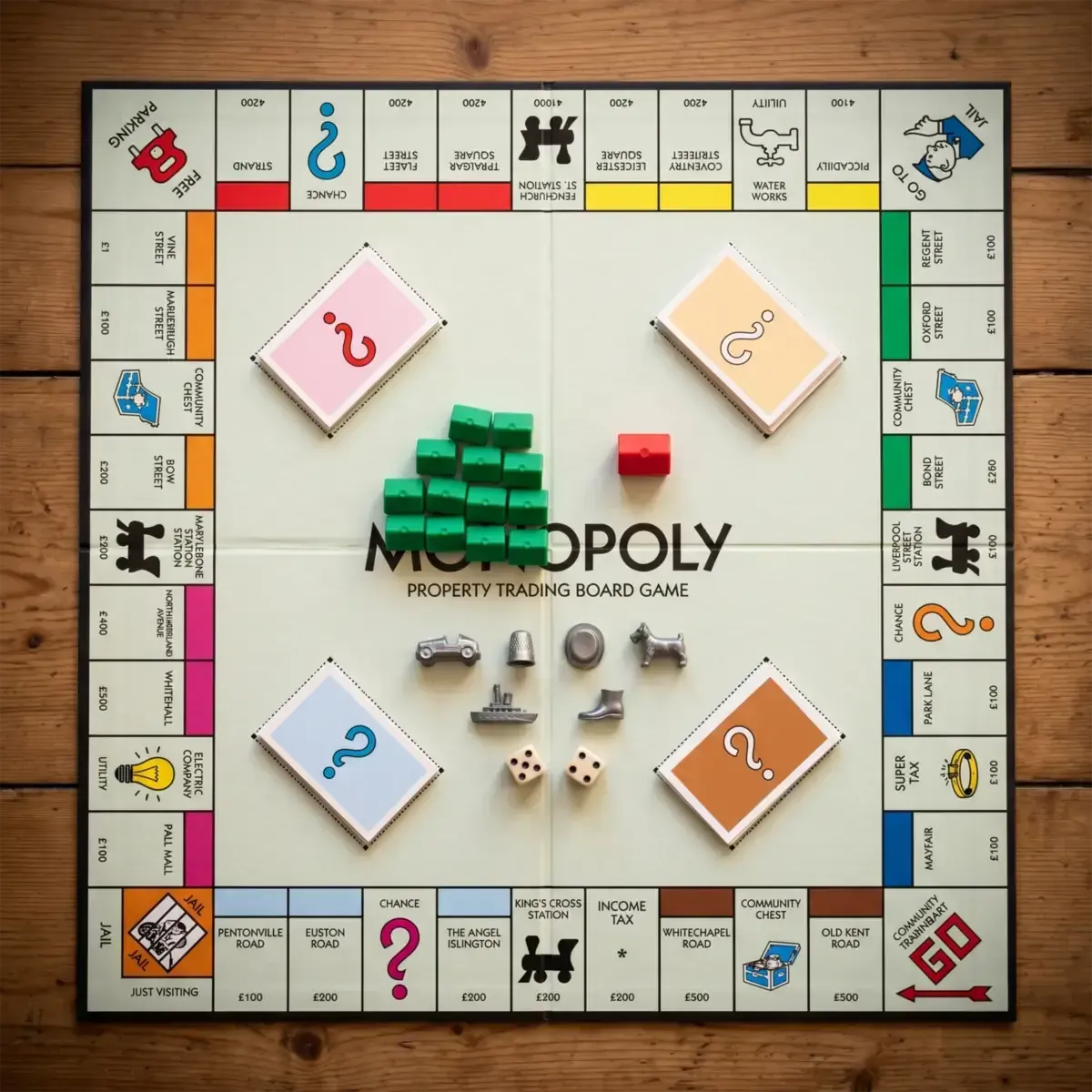
There are exactly 28 buyable Monopoly properties on the standard board — 22 colored streets, four railroads, and two utilities spread across 40 total spaces.
After playing well over 500 games in my lifetime, I can tell you that memorizing these specific spots is the difference between going bankrupt in an hour and becoming the reigning family champion. Below is the complete list of monopoly property colors, names, prices, rents, and house costs — plus a quick take on which sets are actually worth fighting for.
Table of Contents
- How Many Spaces and Properties Are on a Monopoly Board?
- All Monopoly Property Colors in Order (Complete List)
- Railroads and Utilities (The Other 6 Buyable Spaces)
- Full Monopoly Board Spaces List (All 40 Squares)
- Which Color Sets Are Actually Worth Buying?
- Property Traps to Avoid
- Frequently Asked Questions
- Your Winning Strategy
How Many Spaces and Properties Are on a Monopoly Board?
If you count every square around the perimeter, how many spaces on a monopoly board are there? Exactly 40.
You can only place a Title Deed on 28 of them. The remaining 12 spaces are corners (GO, Jail, Free Parking, Go to Jail), two Income and Luxury Tax squares, and six Chance or Community Chest draw spaces.
Knowing street names and their exact board position is how you predict where opponents will land three turns from now. My aunt Linda still calls Baltic Avenue “the purple one” because her childhood set used purple ink for the cheapest group — she and my uncle argued about it for twenty minutes at Easter brunch until I pulled up the Hasbro rulebook on my phone. Hasbro standardized those spaces to brown in 2008, but the old purple-vs-brown debate refuses to die in living rooms everywhere.
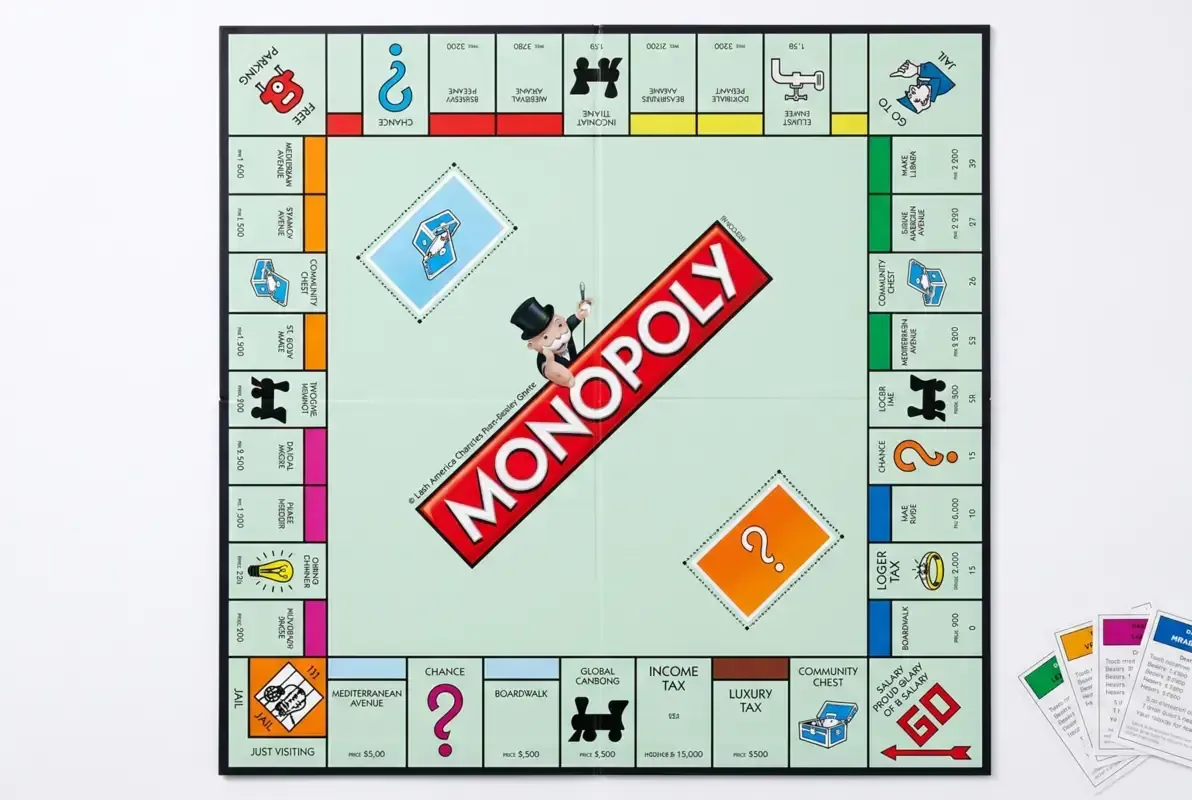
The original monopoly board properties are based on real streets in Atlantic City, New Jersey. As you move clockwise from GO, prices climb steadily — and so do house-building costs.
One table argument this solves: How Much Money Do You Start With in Monopoly?
All Monopoly Property Colors in Order (Complete List)
When a game starts, the board feels massive. Break it down by monopoly property colors, though, and the real estate market becomes manageable.
Here is the master reference — all monopoly properties and prices in the exact order you encounter them clockwise from GO, with base rent (no houses), house-building cost, and board position number.
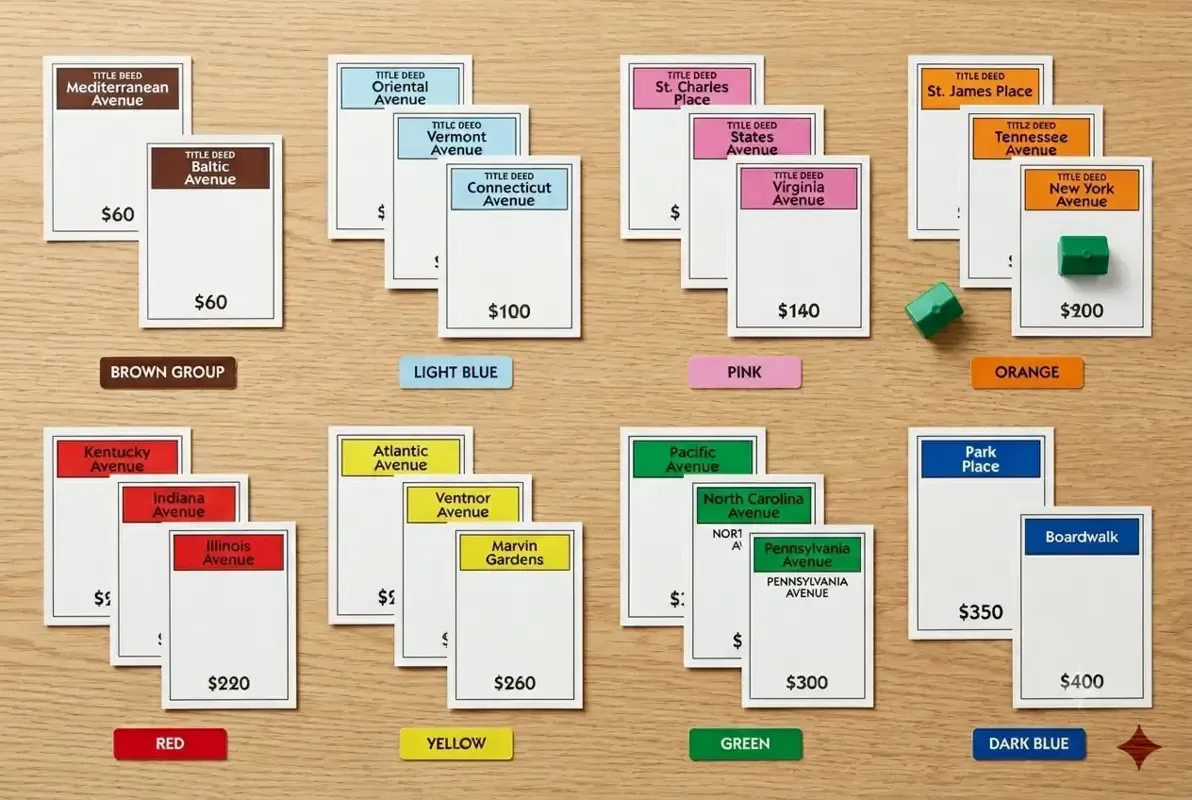
| Color | Property | Board # | Price | House Cost | Base Rent |
|---|---|---|---|---|---|
| Brown | Mediterranean Avenue | 1 | $60 | $50 | $2 |
| Brown | Baltic Avenue | 3 | $60 | $50 | $4 |
| Light Blue | Oriental Avenue | 6 | $100 | $50 | $6 |
| Light Blue | Vermont Avenue | 8 | $100 | $50 | $6 |
| Light Blue | Connecticut Avenue | 9 | $120 | $50 | $8 |
| Pink | St. Charles Place | 16 | $140 | $100 | $10 |
| Pink | States Avenue | 13 | $140 | $100 | $10 |
| Pink | Virginia Avenue | 14 | $160 | $100 | $12 |
| Orange | St. James Place | 11 | $180 | $100 | $14 |
| Orange | Tennessee Avenue | 18 | $180 | $100 | $14 |
| Orange | New York Avenue | 19 | $200 | $100 | $16 |
| Red | Kentucky Avenue | 21 | $220 | $150 | $18 |
| Red | Indiana Avenue | 23 | $220 | $150 | $18 |
| Red | Illinois Avenue | 24 | $240 | $150 | $20 |
| Yellow | Atlantic Avenue | 26 | $260 | $150 | $22 |
| Yellow | Ventnor Avenue | 27 | $260 | $150 | $22 |
| Yellow | Marvin Gardens | 29 | $280 | $150 | $24 |
| Green | Pacific Avenue | 31 | $300 | $200 | $26 |
| Green | North Carolina Avenue | 32 | $300 | $200 | $26 |
| Green | Pennsylvania Avenue | 34 | $320 | $200 | $28 |
| Dark Blue | Park Place | 37 | $350 | $200 | $35 |
| Dark Blue | Boardwalk | 39 | $400 | $200 | $50 |
Owning every property in a color group doubles the base rent on undeveloped lots. Full monopoly rents with houses and hotels are printed on each Title Deed card. For break-even math by color group, see our Monopoly property ROI guide.
1. The Brown Properties
These are the cheapest spaces on the board. Brown properties in monopoly games used to appear as purple in older UK and US editions, but Hasbro standardized them to brown in 2008.
- Mediterranean Avenue: $60 — board position 1
- Baltic Avenue: $60 — board position 3
- House building cost: $50 each
Cheap to buy, cheap to develop. A full brown monopoly plus four houses on each lot costs only $560 total — less than a single undeveloped Boardwalk deed.
2. The Light Blue Properties
Sometimes called blue monopoly properties in casual conversation (not to be confused with Dark Blue).
- Oriental Avenue: $100 — position 6
- Vermont Avenue: $100 — position 8
- Connecticut Avenue: $120 — position 9
- House building cost: $50 each
The light blue monopoly properties punch above their price tag. You can put hotels on all three for under $1,000 in total development — a steal compared to the greens.
3. The Pink Properties
Older players occasionally call these purple properties when mixing up edition colors. On modern boards they are unmistakably pink.
- St. Charles Place: $140 — position 16
- States Avenue: $140 — position 13
- Virginia Avenue: $160 — position 14
- House building cost: $100 each
4. The Orange Properties
These sit immediately after the Jail corner — and that board position matters more than the deed price suggests.
- St. James Place: $180 — position 11
- Tennessee Avenue: $180 — position 18
- New York Avenue: $200 — position 19
- House building cost: $100 each
The orange spaces in monopoly are foot-traffic magnets. More on why in the strategy section below.
5. The Red Properties
- Kentucky Avenue: $220 — position 21
- Indiana Avenue: $220 — position 23
- Illinois Avenue: $240 — position 24
- House building cost: $150 each
Red monopoly properties sit in the sweet spot between orange affordability and yellow price tags. Illinois Avenue, in particular, is one of the most-landed-on individual spaces on the entire board.
6. The Yellow Properties
- Atlantic Avenue: $260 — position 26
- Ventnor Avenue: $260 — position 27
- Marvin Gardens: $280 — position 29
- House building cost: $150 each
Trivia most guides skip: Marvin Gardens is a deliberate misspelling. The real Atlantic City neighborhood is Marven Gardens — the “u” was dropped when Charles Darrow copied the street names onto his handmade board in the 1930s. The typo has been official for nearly a century.
7. The Green Properties
- Pacific Avenue: $300 — position 31
- North Carolina Avenue: $300 — position 32
- Pennsylvania Avenue: $320 — position 34
- House building cost: $200 each
The green spaces monopoly players fight over look prestigious. The development bill tells a different story — see the traps section.
8. The Dark Blue Properties
The most expensive monopoly board spaces you can own.
- Park Place: $350 — position 37
- Boardwalk: $400 — position 39
- House building cost: $200 each
Boardwalk and Park Place are only two spaces. That limits how often opponents actually pay you — no matter how satisfying a $2,000 hotel rent feels when it finally lands.
Railroads and Utilities (The Other 6 Buyable Spaces)
Six more buyable spaces do not belong to any color group. They are easy to forget when you are memorizing street names, but they complete the 28-property count.
The Four Railroads ($200 Each)
| Railroad | Board # | Price | Rent (1 owned) | Rent (4 owned) |
|---|---|---|---|---|
| Reading Railroad | 5 | $200 | $25 | $200 |
| Pennsylvania Railroad | 15 | $200 | $25 | $200 |
| B&O Railroad | 25 | $200 | $25 | $200 |
| Short Line | 35 | $200 | $25 | $200 |
My brother traded Reading Railroad for a single orange deed in a three-player game last summer. He thought St. James Place was the steal. I owned Pennsylvania and B&O already — two railroads charging $50 and $100 per hit — and I collected more passive rent before dessert than he earned from that orange lot all night. Reading railroad monopoly ownership matters because a railroad sits on every side of the board. Steady income while you chase color sets.
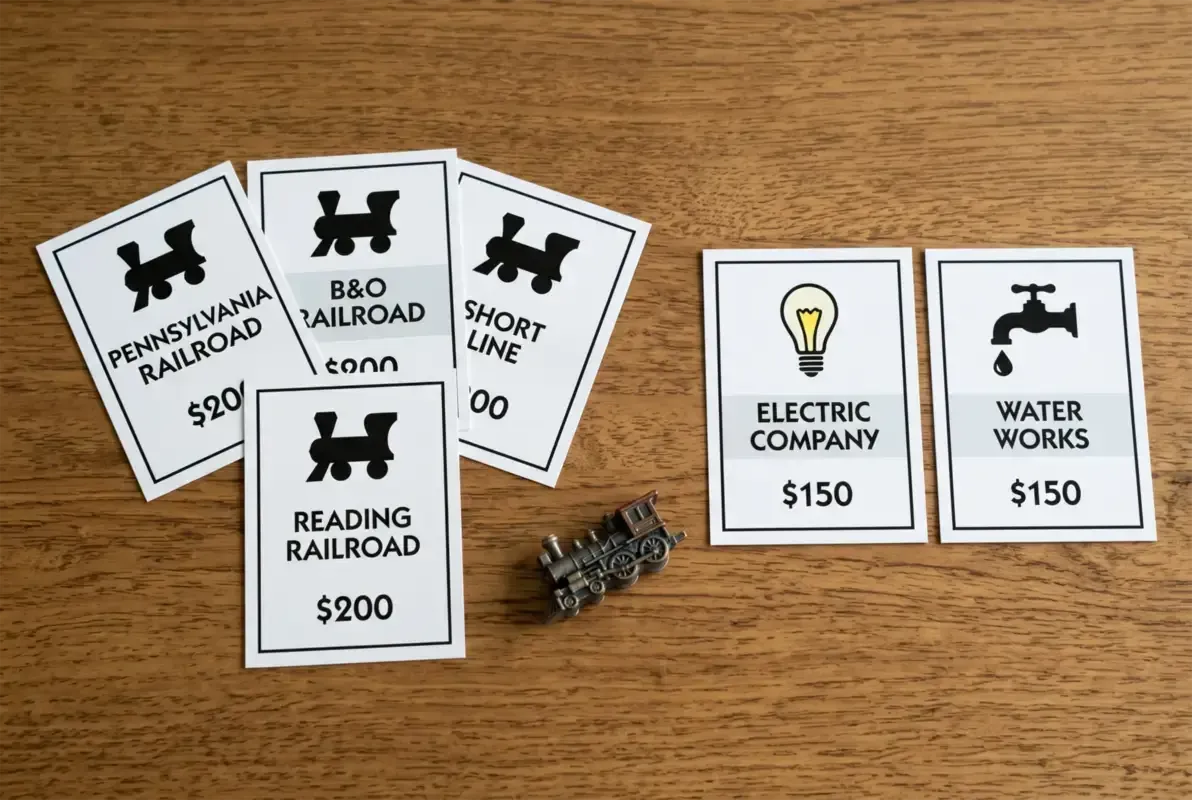
The Two Utilities ($150 Each)
| Utility | Board # | Price | Rent Formula |
|---|---|---|---|
| Electric Company | 12 | $150 | 4× dice roll (1 owned) |
| Water Works | 28 | $150 | 4× dice roll (1 owned) |
| Both utilities | — | $300 | 10× dice roll |
Maximum payout with both utilities is $120 on a roll of 12 — fine in the early game, nearly worthless when players are passing thousands of dollars. Trade them toward properties you can actually develop.
Full Monopoly Board Spaces List (All 40 Squares)
The monopoly board spaces list below covers every square — not just the 28 you can buy. Use it when someone argues about whether Free Parking pays out (it does not under official rules) or which space sits two squares past Jail.
| # | Space | Type |
|---|---|---|
| 0 | GO | Corner — collect $200 salary |
| 1 | Mediterranean Avenue | Brown property |
| 2 | Community Chest | Card square |
| 3 | Baltic Avenue | Brown property |
| 4 | Income Tax | Tax — pay $200 or 10% of total worth |
| 5 | Reading Railroad | Railroad |
| 6 | Oriental Avenue | Light Blue property |
| 7 | Chance | Card square |
| 8 | Vermont Avenue | Light Blue property |
| 9 | Connecticut Avenue | Light Blue property |
| 10 | Jail / Just Visiting | Corner |
| 11 | St. James Place | Orange property |
| 12 | Electric Company | Utility |
| 13 | States Avenue | Pink property |
| 14 | Virginia Avenue | Pink property |
| 15 | Pennsylvania Railroad | Railroad |
| 16 | St. Charles Place | Pink property |
| 17 | Community Chest | Card square |
| 18 | Tennessee Avenue | Orange property |
| 19 | New York Avenue | Orange property |
| 20 | Free Parking | Corner — no official payout |
| 21 | Kentucky Avenue | Red property |
| 22 | Chance | Card square |
| 23 | Indiana Avenue | Red property |
| 24 | Illinois Avenue | Red property |
| 25 | B&O Railroad | Railroad |
| 26 | Atlantic Avenue | Yellow property |
| 27 | Ventnor Avenue | Yellow property |
| 28 | Water Works | Utility |
| 29 | Marvin Gardens | Yellow property |
| 30 | Go to Jail | Corner — sent to Jail |
| 31 | Pacific Avenue | Green property |
| 32 | North Carolina Avenue | Green property |
| 33 | Community Chest | Card square |
| 34 | Pennsylvania Avenue | Green property |
| 35 | Short Line | Railroad |
| 36 | Chance | Card square |
| 37 | Park Place | Dark Blue property |
| 38 | Luxury Tax | Tax — pay $100 |
| 39 | Boardwalk | Dark Blue property |
Which Color Sets Are Actually Worth Buying?
My cousin Greg still thinks hoarding the green monopoly properties is a genius move, and every Thanksgiving I gladly watch him go bankrupt trying to afford the $200 houses.
The biggest mistake casual players make is assuming the most expensive properties are the best properties in monopoly. Boardwalk and Park Place look glamorous. Relying on dark blue properties in monopoly is a weak statistical strategy — they are brutally expensive to develop, and there are only two of them.
If you want a quick answer: buy the orange properties and develop them fast.
Players leaving Jail — the most visited square on the board — roll 6, 7, 8, and 9 constantly. From Jail, those totals land on St. James Place, Tennessee Avenue, and New York Avenue with uncomfortable regularity. Three houses on orange drains family cash reserves faster than almost any other color set.
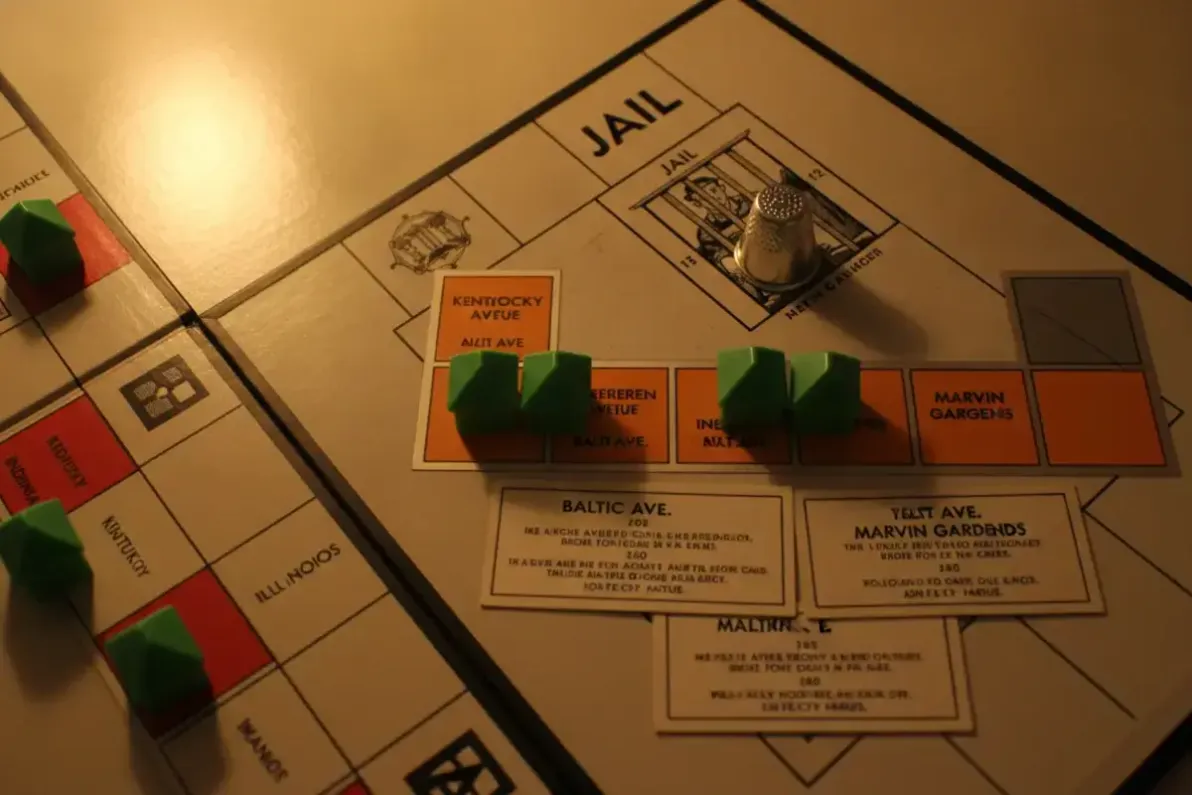
That is the short version. Landing-probability tables, ROI rankings, and break-even turn counts live in our dedicated guides — Best Monopoly Properties for tier rankings and Monopoly property ROI for the rent math.
Before you trade away a property, read this: When Can You Buy Houses in Monopoly?
Property Traps to Avoid
On the flip side, some spots look like great deals and turn into financial traps.
The green spaces monopoly creators placed before the final corner are the classic example. Yes, hotel rent on Pennsylvania Avenue is devastating — when someone actually lands there. Getting to that point costs a fortune: $920 just to buy the deeds, then $600 more for one house on each space. By the time you afford that, a player with light blue or orange monopolies has already bankrupted half the table.
Similarly, utilities are dead weight in the late game. A $120 maximum payout is pocket change when rents hit four figures.
And do not hoard cash for Boardwalk on turn three. The best properties in monopoly are usually the ones you can develop before anyone else — not the ones with the highest printed rent.
At a tournament qualifier in 2019, I watched a player monopolize the housing supply — four houses on every brown and light blue lot while the Bank still had twelve houses left. Nobody else could build. He did not even need hotels. The table ran out of green houses before anyone touched yellow. Brutal, legal, and exactly why you should know when you can buy houses before your opponents do.
Frequently Asked Questions
How many properties are on a Monopoly board?
28 buyable properties — 22 colored streets, four railroads, and two utilities. The board has 40 total spaces; the other 12 are corners, taxes, and card draws. See the full 40-space table above.
How many houses come in Monopoly?
Exactly 32 green houses and 12 red hotels in a standard box. If the Bank runs out of houses, you cannot substitute coins or buttons — you must wait for someone to sell back or upgrade to a hotel. No improvised tokens.
Is Reading Railroad worth keeping?
Yes. At $200, Reading Railroad is the cheapest railroad, and owning all four charges $200 rent per landing. Railroads on every board side mean steady income while you build color monopolies. Do not trade it for a single deed unless the deal completes a monopoly you can develop immediately.
Can you mortgage property in Monopoly?
Yes — you cannot sell deeds back to the Bank, but you can mortgage them. Flip the card over; the Bank loans half the printed purchase price. You collect no rent on mortgaged spaces until you repay the loan plus 10% interest.
What are the most expensive Monopoly properties?
Boardwalk ($400) and Park Place ($350) top the price list. Among full color groups, Dark Blue costs the most to buy and develop. Green is a close second for development cost — $200 houses on each of three spaces.
What color is Baltic Avenue?
Brown on modern Hasbro boards. Older editions used purple ink for the cheapest group. Hasbro standardized the color to brown in 2008, but veteran players still argue about it — ask my aunt Linda.
If your group plays house rules, check out: What Happens When You Land on Free Parking in Monopoly?
Your Winning Strategy
Understanding the board layout changes everything about how you play.
Stop saving cash for Boardwalk. Start aggressively trading for cheap and mid-tier colors early. Lock down the light blues or oranges while everyone else fights over the expensive stuff, and you will have hotels on the board before they complete a set.
For the full rules and strategy picture, start with our complete Monopoly guide and browse the Economics hub for rent math and ROI breakdowns.
Which property color do you usually refuse to trade away no matter what your opponents offer you?
Questions
Frequently Asked Questions
How many properties are on a Monopoly board?
There are 28 buyable properties on the standard board: 22 colored streets in eight color groups, four railroads, and two utilities. The board has 40 total spaces — the other 12 are corners, taxes, and Chance or Community Chest squares.
How many houses come in Monopoly?
The standard game includes exactly 32 green houses and 12 red hotels. If the Bank runs out of houses, no player can build more until someone sells back to the Bank or upgrades to a hotel.
Is Reading Railroad worth keeping?
Yes. Reading Railroad costs $200, and owning all four railroads charges $200 rent per landing. Because a railroad sits on every side of the board, they provide steady passive income while you build color monopolies.
Can you mortgage property in Monopoly?
Yes. Flip the Title Deed card over and the Bank loans you half the property's printed purchase price. You cannot collect rent on a mortgaged space until you repay the loan plus 10% interest.
What are the most expensive Monopoly properties?
Boardwalk ($400) and Park Place ($350) are the two most expensive colored streets. Among color groups, Dark Blue is the priciest set to buy and develop, with $200 houses on each space.
What color is Baltic Avenue?
Baltic Avenue is brown on modern Hasbro boards. Older editions sometimes printed the cheapest properties as purple — Hasbro standardized them to brown in 2008.