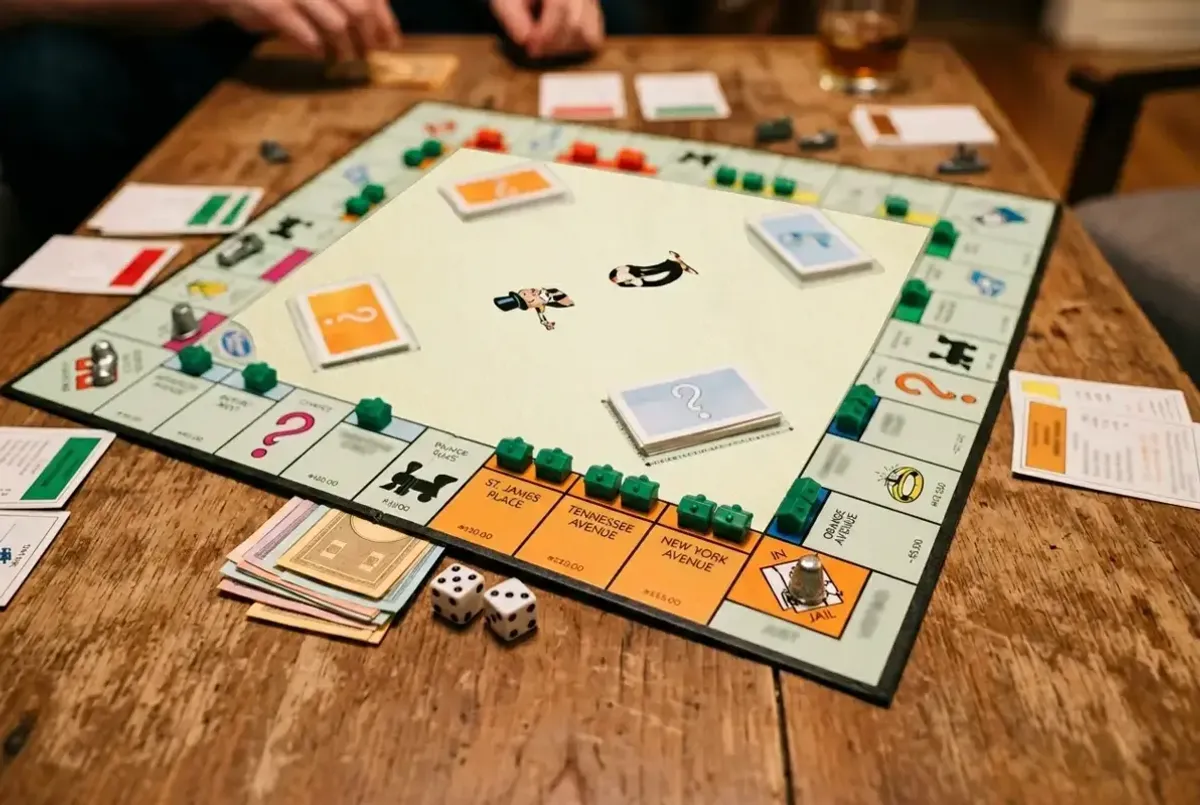
You win Monopoly by bankrupting every other player — that is the only official win condition. The last person standing with cash and property takes the table.
I’ve played 500+ games over fifteen years, and the players who lose almost always treat the board like a savings account instead of a race to build rent. My uncle Dave still does this every Thanksgiving: he hoards $500 bills, refuses to buy St. James Place because it feels “too expensive,” and goes bust holding a fistful of cash he never invested.
This guide covers the math, trading tactics, and cutthroat moves I use when someone asks how do you win a game of monopoly against players who play as aggressively as I do — including the infamous 21-second trick, auction sniping, and a completely different playbook for Monopoly Deal. For the full rules foundation, start with our Monopoly strategy hub or the complete Monopoly guide.
Table of Contents
- The Core Strategy: How Do You Win at Monopoly?
- How to Win Monopoly in 21 Seconds
- Tips on How to Win Monopoly Consistently
- Win the Auctions Nobody Wants
- Railroads: Passive Income While You Build
- Five Mistakes That Lose Games
- How to Win at Monopoly Deal
- The Final Push When the Board Is Crowded
- Your Next Move
The Core Strategy: How Do You Win at Monopoly?
If you are trying to figure out how do you win at monopoly against experienced opponents, stop thinking about lucky dice and start thinking about return on investment.
Cash sitting in your hand is dead money. Every dollar that does not buy a deed, a house, or leverage in a trade is a dollar your opponents can eventually take from you through rent. The opening laps are a land grab — buy almost everything you land on, even properties you do not want, because ownership gives you chips at the negotiating table.
I learned this the hard way at a neighborhood tournament in 2019. I passed on Mediterranean Avenue twice because it was “worthless.” The player who scooped both browns traded them for a railroad and a pink deed within twenty minutes. I owned nothing negotiable. I was out in forty-five minutes.
The Three Rules Every Winner Follows
| Rule | What It Means | Why It Wins |
|---|---|---|
| Buy early | Purchase nearly every unowned property in laps 1–3 | More deeds = more trade leverage and rent income |
| Trade for monopolies | Target complete color sets, not random deeds | Only monopolies let you build houses and charge real rent |
| Develop before you save | Put cash into houses on your best set | Rent scales faster than hoarding $500 bills |
You cannot save your way to victory.
When people ask how do i win monopoly against a table that already knows the basics, the answer is conversion speed: turn your $1,500 starting bankroll into developed property before anyone else stabilizes a monopoly.
One table argument this solves: Do you put tax money on Free Parking? — under official rules, taxes leave circulation. That cash drain is why developing property beats hoarding.
How to Win Monopoly in 21 Seconds
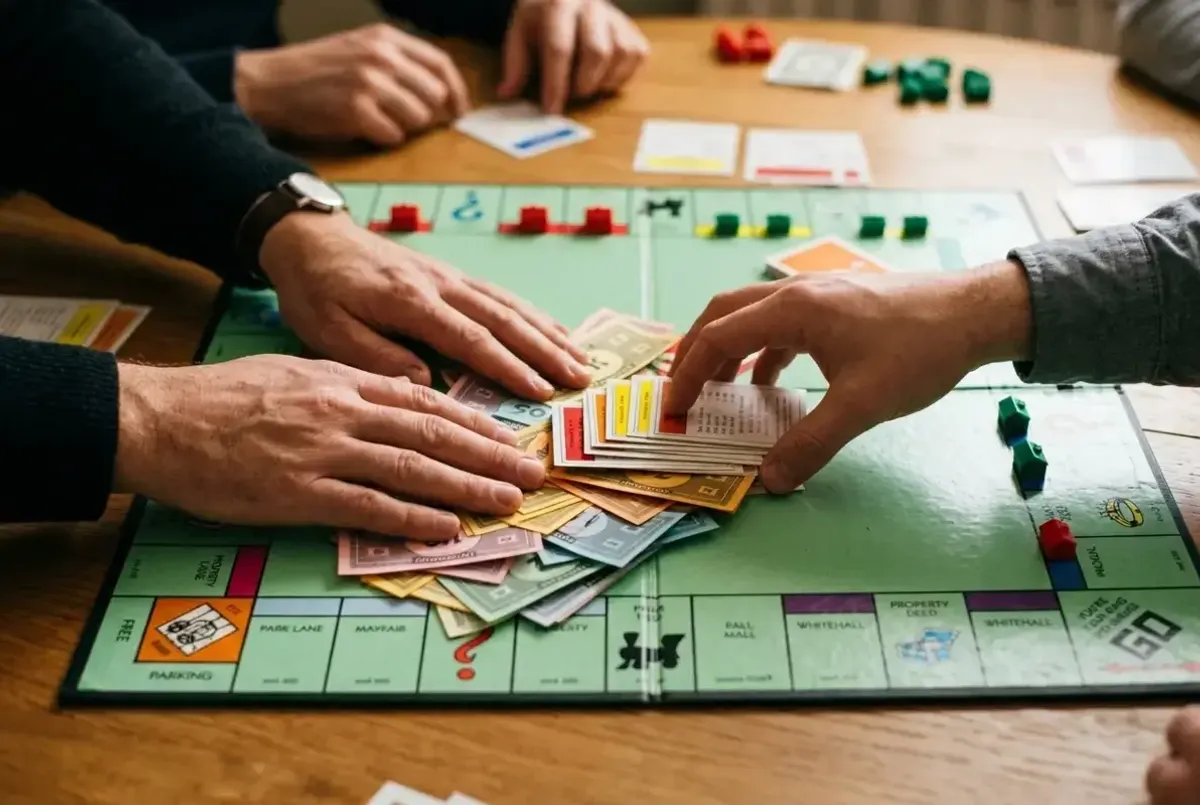
At my last game night, a newer player asked if there was a cheat code — some mathematical way to end the misery before midnight. There is a theoretically perfect sequence that became a viral search for how to win monopoly in 21 seconds, and it is worth understanding even though you will never pull it off.
The four-turn miracle works like this:
- Turn 1 (Player 1): Roll doubles, buy Boardwalk ($400), roll again, buy Park Place ($350), pass Go.
- Turn 2 (Player 2): Roll and land on Income Tax, losing cash to the Bank.
- Turn 3 (Player 1): Build three houses on Boardwalk.
- Turn 4 (Player 2): Roll the exact number to land on Boardwalk, cannot afford rent, instant bankruptcy.
Total elapsed time: roughly 21 seconds. Hilarious at parties. Useless as strategy.
Truman Collins’s probability analysis puts the combined odds of that exact dice sequence at about 1 in 253,899,891,671,040. I have seen someone roll doubles twice in a row exactly once in fifteen years. I have never seen this four-turn ending outside of a YouTube comment section.
Treat the 21-second trick as a conversation starter, not a game plan.
Tips on How to Win Monopoly Consistently
Since you cannot rely on a miracle opening, you need probability. The board is not flat — certain spaces see far more foot traffic than others, and that skews which properties print money.
If you want to know how to win in monopoly every time you sit down, memorize these three phases. I have used this framework in local tournaments and at family tables where nobody reads the rulebook.
Phase 1: Target the Oranges and Reds
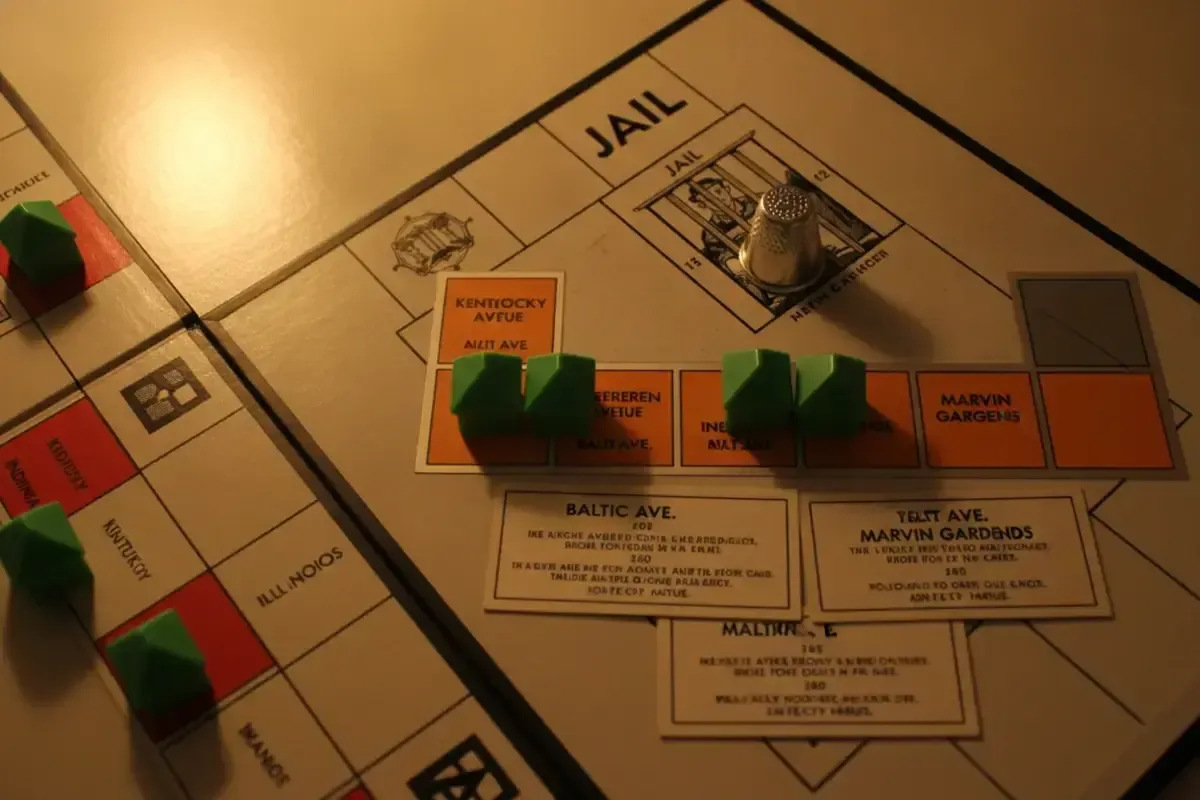
Players constantly cycle through Jail. Properties sitting 6, 8, and 9 spaces from Jail — the Orange group (St. James Place, Tennessee Avenue, New York Avenue) and the Red group (Kentucky, Indiana, Illinois) — see the highest landing frequency on the entire board.
Truman Collins’s simulations show Tennessee Avenue and New York Avenue among the most-landed-on buyable spaces in the game — roughly 5–6% of all rolls per space compared with under 3% for Mediterranean Avenue. That gap compounds over a two-hour session.
Forget the romance of Boardwalk for your opening strategy. Trade whatever you must to complete the Oranges. They cost less to develop than Dark Blue, hit harder per dollar invested, and punish opponents who leave Jail and immediately roll into your rent trap.
My sister once traded me a railroad plus $200 for my third orange deed. I thought I was robbing her. She bankrupted me on Tennessee Avenue with three houses six turns later. Best trade she ever made against me.
For the full color-group breakdown, see our Monopoly property colors guide.
Phase 2: Create a Housing Shortage
This is the most ruthless legal tactic in tabletop gaming, and it is why people ask how to always win at monopoly when the table already owns developed sets.
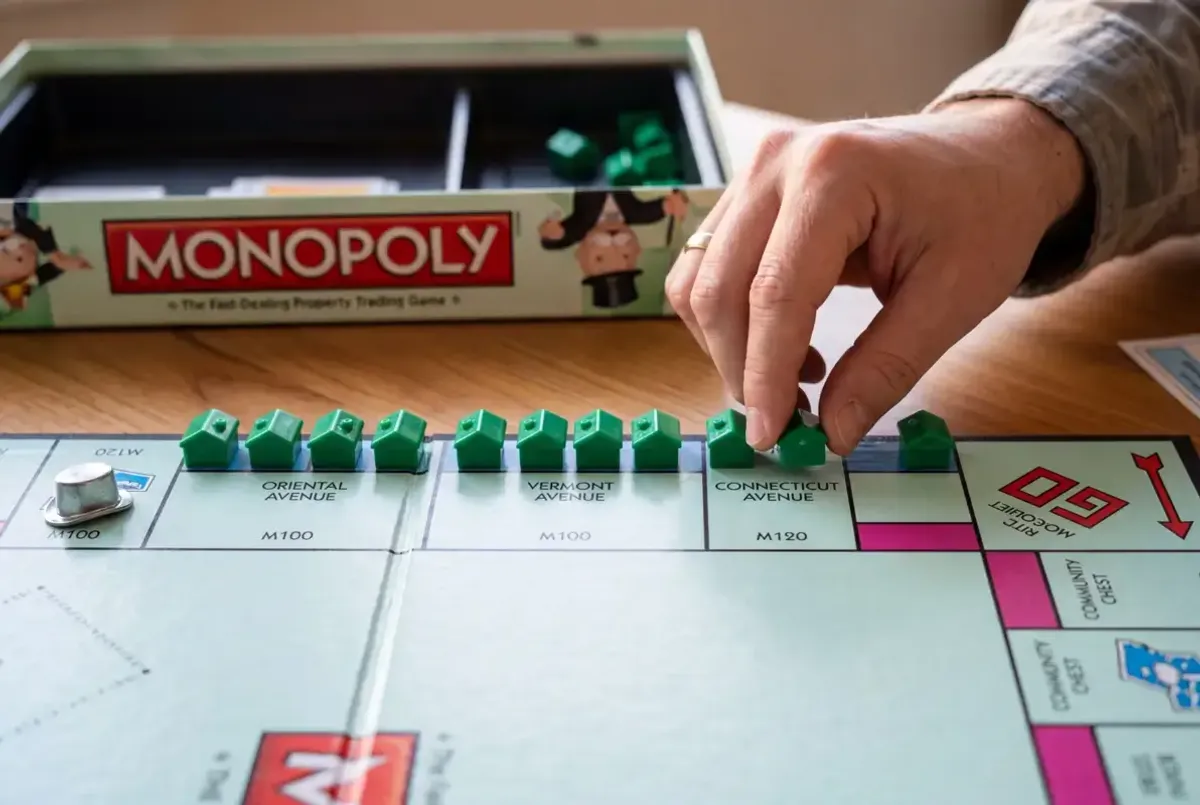
The physical box contains 32 green houses — no more. Once you own a cheap monopoly like the Light Blues or Browns, buy four houses on each property in that set. Do not upgrade to hotels. Four houses times three properties equals twelve houses locked on your board — houses your opponents cannot buy for their Park Place hotels.
I watched a college roommate freeze our entire table this way. He owned the Light Blues, bought twelve houses, and my Dark Blue monopoly sat undeveloped for an hour while he collected $550 rents on Connecticut Avenue. Half the table wanted to flip the board. Nobody could find a rule that stopped him.
If your group argues about building timing: When can you actually buy houses? — the answer is any time you own a full color set, not only on your turn.
Phase 3: Go to Jail (And Stay There)
Early game, pay the $50 fine and leave Jail immediately. You need to buy unowned property while it still exists.
Late game, when hotels cover the board, Jail becomes a bunker. You still collect rent from opponents. You still trade and mortgage. You just do not roll into someone else’s hotel on New York Avenue.
When someone asks me how do u win monopoly during the third hour of a deadlocked game, I tell them to sit in the cell and let the rent pressure crush everyone else first.
| Game Phase | Jail Strategy | Reason |
|---|---|---|
| Early (laps 1–4) | Pay $50, buy property | Unowned deeds disappear fast |
| Mid (monopolies forming) | Pay $50, develop sets | You need houses on the board |
| Late (hotels everywhere) | Stay as long as possible | Avoid rent bombs while income continues |
Win the Auctions Nobody Wants
Most casual tables ignore this rule entirely, and it costs them games.
When a player lands on an unowned property and refuses to buy it at list price, the Hasbro rulebook requires the Banker to auction that deed to every player — starting bid as low as $1. No one has to wait for their turn. Everyone bids at once.
I picked up both Pinks for $180 total at a game night last March because two players passed on St. Charles Place and the table treated the auction like a formality. I completed the monopoly four trades later and had houses up before anyone realized what happened.
Auction Rules Worth Memorizing
- Any player can bid, in any order — not just the person who landed on the space.
- The Banker can set a minimum bid, but it can start at $1.
- You do not need to own adjacent properties to bid.
- Mortgage property or sell houses first if you need cash to win a cheap auction.
Sniping undervalued deeds is how you build monopolies when the dice refuse to cooperate. If your group never runs auctions, read the Monopoly FAQ and reset to official rules before your next session.
Railroads: Passive Income While You Build
Railroads are not flashy, but they fund everything else.
Each railroad charges $25 rent with one deed, scaling to $200 when you own all four. Because a railroad sits on every side of the board, they collect steadily while you pour cash into developing your Orange monopoly. I treat railroads like a savings account that pays rent every few laps instead of sitting dead in my hand.
The break-even math is forgiving: Reading Railroad costs $200. You earn back the purchase price in eight landings at base rent — fewer if opponents own other railroads and pay the scaled rate. That is faster than waiting for someone to hit a single undeveloped yellow.
My preferred opening priority when I cannot get an orange deed:
- Buy any railroad I land on — always.
- Trade a single railroad plus cash for a deed I need in a color group.
- Hold all four railroads only if no monopoly trade is available within two laps.
See our property colors guide for railroad and utility rent tables alongside every color group.
Five Mistakes That Lose Games
I see the same five errors at almost every family table. Fixing even one of them shifts your win rate noticeably over a season of game nights.
1. Hoarding Cash Instead of Buying
Uncle Dave’s Thanksgiving strategy — keep $800 in hand “for emergencies” — means zero rent income while opponents develop. Emergencies come from rent, not savings. Buy the deed.
2. Chasing Boardwalk Too Early
Dark Blue is a late-game luxury. Spending $400 on Boardwalk in lap two when you could buy three cheaper deeds leaves you with one card and no trade leverage.
3. Refusing to Trade
Monopolies win games, not scattered singles. If you hold two oranges and an opponent holds the third, every lap you wait is a lap they might complete a different set first. Make the trade.
4. Building Unevenly
The even-build rule exists for a reason — stacking four houses on one property while leaving another bare caps your rent and signals poor planning to experienced traders. Spread houses evenly to maximize landing-zone damage.
5. Ignoring Auctions
Already covered, but it bears repeating: passing on a property does not remove it from play. It goes to the highest bidder — often for half price. The player who wins cheap auctions wins cheap monopolies.
How to Win at Monopoly Deal
A lot of players assume board-game tactics transfer to the card version. They do not.
If you are looking for tips on how to win at monopoly deal, abandon cash-flow thinking entirely. The win condition is simple: be the first player to lay down three complete property sets. No rent. No board movement. No houses.
The smartest move is counterintuitive — keep your most valuable complete sets in your hand until the final turn. Lay them down too early and someone drops a Deal Breaker card and steals your win.
At a beach house last summer, my cousin flashed a full Green set on turn four. Three players immediately targeted him with rent cards and forced trades. He lost the set before his next turn. I held two complete sets hidden, banked cash cards for three rounds, then dropped both sets plus a Sly Deal in one turn. Table erupted. I had been “broke” on the table for ten minutes.
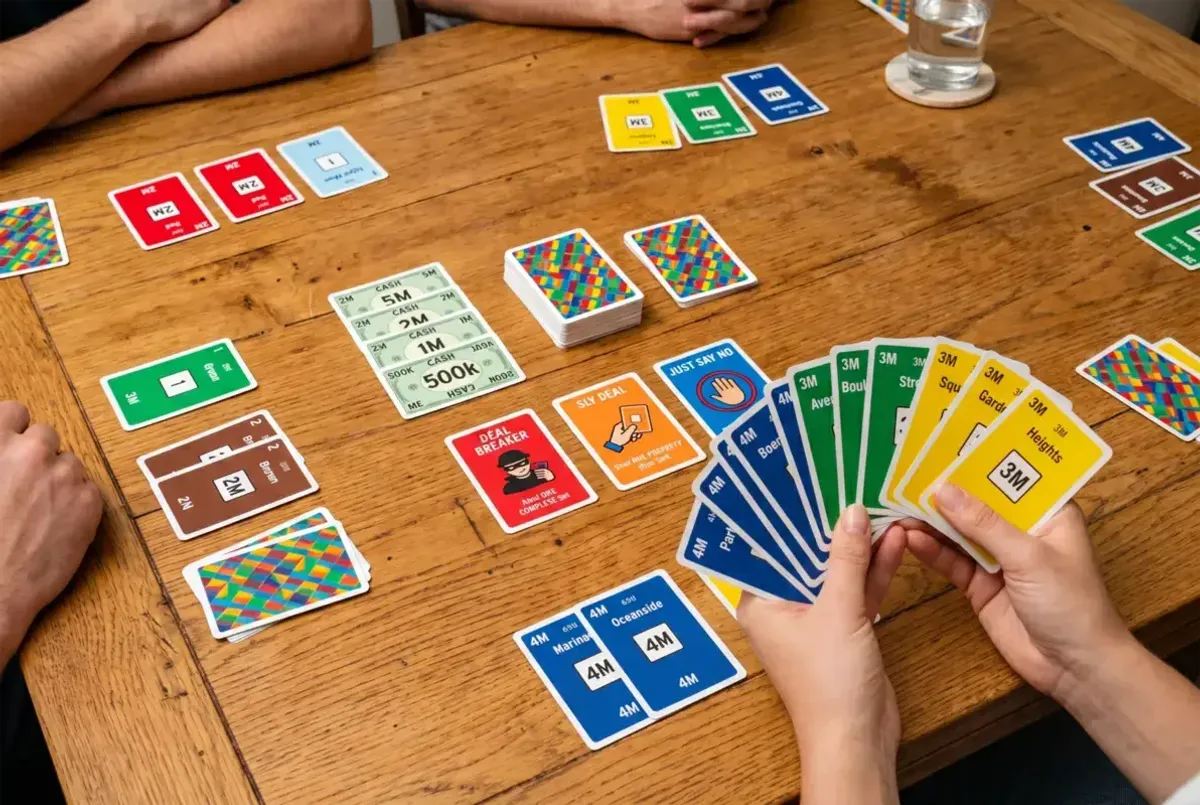
Monopoly Deal Quick-Win Checklist
- Bank cash cards — they protect your hand from rent and debt cards.
- Hoard action cards — Sly Deal, Force Deal, and Deal Breaker win games.
- Hide full sets — reveal only when you can win or block a winner.
- Watch opponents’ hand sizes — a player drawing two cards per turn is close to a finish.
- Dump single properties — partial sets are bait; complete sets are ammunition.
- Play Pass Go cards early — extra draws compound when the deck is fresh.
Key Cards That Decide Deal Games
| Card | What It Does | When to Save It |
|---|---|---|
| Deal Breaker | Steals a complete property set from the table | Hold until an opponent reveals a winning third set |
| Sly Deal | Steals a single property from the table or a hand | Use to complete a hidden set on your winning turn |
| Just Say No | Blocks any action card | Keep one in reserve when you are one set from winning |
| Double the Rent | Doubles a rent charge | Pair with a large rent card to drain an opponent’s bank |
| Forced Deal | Swap a property with any player | Break up an opponent’s nearly complete set mid-game |
The official Monopoly Deal rules (PDF) confirm there is no building phase — property sets alone decide the winner.
The Final Push When the Board Is Crowded
When the game drags past two hours, players get desperate. I constantly see people searching their phones for variations of how to win a game of monopoly when every property is owned and nobody wants to trade.
The answer is smart mortgaging.
If you land on a hotel and owe $1,400, do not trade your Orange monopoly to the player you owe. Mortgage your single, unconnected deeds first — the railroad nobody lands on, the utility you bought on lap two, the random yellow you never completed. Raise cash from the Bank, pay the rent, and keep your complete color sets intact.
Unmortgaging costs 10% interest, but a complete monopoly with two houses still gives you a path back. Trading away a developed set to pay one bill ends your game — you just do not realize it until three turns later.
One insight most guides skip: trade timing matters more than trade fairness. The player who completes the first monopoly usually wins not because they got a good deal, but because they developed while everyone else was still collecting singles.
For deeper ROI math on which sets pay back fastest, see our Monopoly property colors guide with full rent tables and development costs.
Your Next Move
Figuring out how to win the monopoly game comes down to math, not miracles: control the Oranges, hoard the plastic houses, snipe cheap auctions, and hide in Jail when the board turns lethal.
Before your next game night, announce your buying strategy out loud. Players who know you will trade aggressively make worse opening offers. That alone has saved me hundreds in fake dollars.
Have you ever frozen a table with the housing shortage — or does your group ban it to keep the peace? Tell us your wildest win (or loss) on the Contact page.
Questions
Frequently Asked Questions
How do you win at Monopoly?
You win by bankrupting every other player — the last person with cash and property standing wins. The fastest path is converting your opening bankroll into rent-generating monopolies, especially Orange and Red properties near Jail, then developing them before opponents can.
How to win at Monopoly every time?
No strategy guarantees a win every single game because dice add randomness. The closest thing to a repeatable edge is buying aggressively early, trading for Orange or Red monopolies, hoarding houses to create a housing shortage, and staying in Jail late game when the board is covered in hotels.
How to win Monopoly in 21 seconds?
A theoretical four-turn sequence — doubles to buy Boardwalk and Park Place, opponent hits Income Tax, you build three houses on Boardwalk, opponent lands on it bankrupt — can end a game in about 21 seconds. The odds are roughly 1 in 253,899,891,671,040, so treat it as a party joke, not a plan.
How to win at Monopoly Deal?
In the card game, you win by being first to lay down three complete property sets. Hoard valuable sets in your hand until the final turn, build your bank with cash cards, and save Sly Deal and Deal Breaker cards to drop your winning sets before opponents can steal them.
What is the housing shortage strategy?
The box contains only 32 houses. If you own a cheap monopoly, buy four houses on each property without upgrading to hotels. That locks up twelve houses and prevents opponents from developing their expensive sets — a legal, ruthless tactic used in tournament play.
Should you stay in Jail late game?
Yes. Early game, pay the $50 fine and keep buying property. Late game, when hotels cover the board, Jail protects you from rent while you still collect from opponents. You cannot win from a cell, but you can survive long enough for someone else to crack first.
Is Boardwalk worth chasing?
As an opening target, rarely. Dark Blue costs $750 for both deeds plus $200 per house. Orange costs $580 for all three plus $100 per house. Oranges get landed on more often and return your investment faster.
Should you buy properties at auction?
Yes, when the price stays below break-even rent value. If a player lands on an unowned property and refuses to buy, the Banker must auction it to all players. Snapping up deeds at a discount is one of the most overlooked ways to build an early monopoly.
How many players is best for competitive play?
Three to four. Two-player games lack trade dynamics. Five or six stretch the property-buying phase so thin that luck dominates longer. Four-player tables with experienced traders produce the most strategic games.